
The Bioinformatics Behind Reliable ctDNA Evidence
Updated: Sep 7
How Altum Sequencing turns millions of sequencing reads into trustworthy molecular evidence — and why quality control matters as much as sensitivity
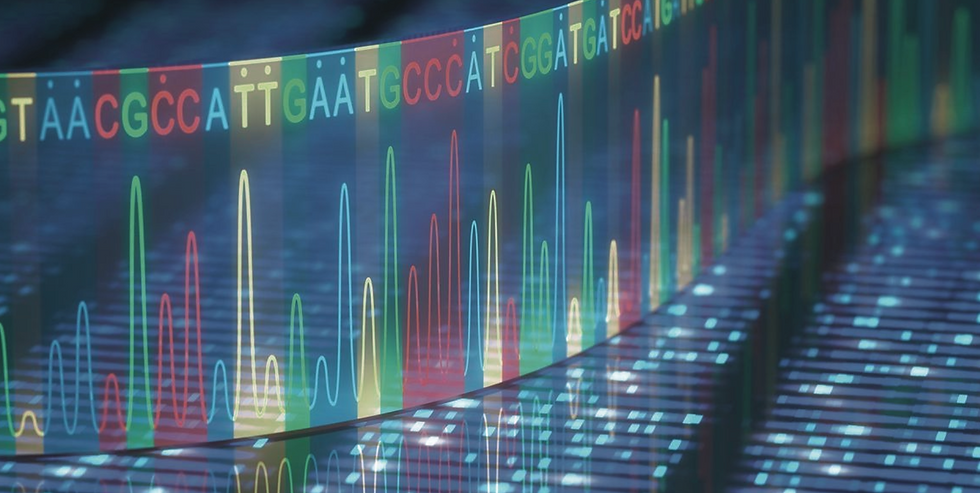
A sequencing run can generate millions of reads, but data volume alone doesn't create molecular evidence. Between raw output and a clinically interpretable result lies a series of scientific decisions — which variants matter, which signals hold up, and how molecular changes should be read over time. This is the role Altum Sequencing's Bioinformatics Department plays in every ctDNA-based Minimal Residual Disease (MRD) test.
From Patient-Specific Biomarkers to Longitudinal Tracking
Altum's tumor-informed platform, TRACKseq, begins with a patient-specific molecular fingerprint: candidate somatic variants identified in baseline tumor tissue, filtered and prioritized for technical performance and biological relevance. A dedicated mini-panel is then designed per patient, and follow-up plasma is sequenced at ultra-deep coverage — with every biomarker's signal interpreted against controls, quality metrics, and prior time points.
Confidence Built From Multiple Layers of Evidence
In high-sensitivity ctDNA monitoring, technical noise can resemble true residual disease. That's why Altum's framework relies on multiple layers of quality control — sample input, sequencing performance, replicate consistency, and healthy-control background — before any result is classified as positive, negative, or non-evaluable.
A Model Validated in Follicular Lymphoma
This framework underpins a prospective study published in Leukemia (2023), which evaluated liquid biopsy MRD alongside PET/CT in 84 follicular lymphoma patients. Trackable mutations were identified in 95% of lymph node samples, and combined molecular and imaging data identified 24-month progression with 88% sensitivity and 100% specificity. The research program has since expanded to a 171-patient cohort, supporting broader longitudinal analysis.
Download the Full Whitepaper
Our new whitepaper, From Sequencing Reads to Reliable Molecular Evidence, explores how Altum's Bioinformatics team combines automation and scientific judgment to turn ctDNA signals into trustworthy, actionable results.
Are you a clinician, researcher, or industry partner interested in molecular monitoring? Get in touch!
Altum Sequencing is a Madrid-based precision oncology company spun off from Hospital Universitario 12 de Octubre, developing ctDNA-based liquid biopsy technology for cancer monitoring and MRD detection.


Comments